Cars vs People: The Hard Trade-Off of Parking Mandates
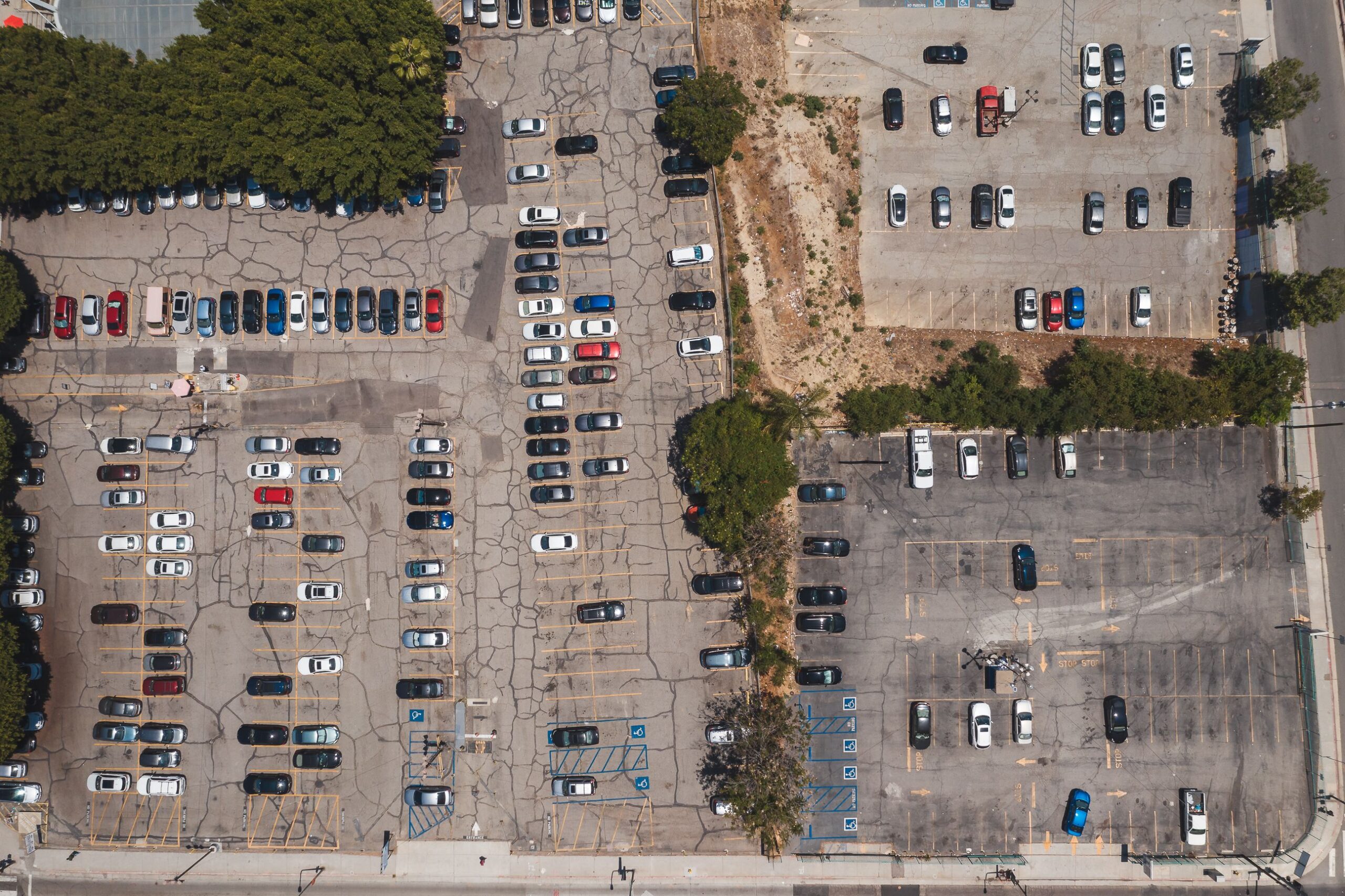
Most cities in California – and the United States – require every new home or business to build a specific number of parking spaces, whether the market demand is there for them or not. A new UCLA research synthesis tracks the cost of these parking mandates. TL;DR: higher rents and fewer homes.
In The Impacts of Minimum Parking Requirements: A Research Synthesis, Ellen Schwartz, Michael Manville, and Adam Millard-Ball review research on parking mandates and their effects on housing costs and development. Published by UCLA’s Institute of Transportation Studies, the report also covers what happens after cities repeal these rules.
Key Takeaways:
- Higher Rent: Renters nationally pay 17% more for housing with bundled parking, about $204 a month, and 71% of carless households pay for space they don’t use.
- Fewer Homes: Oakland’s 1961 parking mandate cut new homes per project by 36%; nationally, required parking can add up to 38% to the cost of smaller, lower-cost apartments.
- Repeal Reduces Oversupply: Nine of twelve cities studied built less parking once minimums were lifted, and Seattle’s repeal saved an estimated $537 million in construction costs over five years
The authors gathered dozens of independent studies spanning several decades and compared housing costs, unit counts, and construction spending before and after cities changed their parking rules. They checked city-specific findings against national data, which let consistent patterns emerge across markets as different as San Francisco and Buffalo.
Bundled Parking Raises Rent for Everyone. Builders bundle parking into nearly every new apartment and condo. Renters and buyers pay for it whether they own a car. Nationally, that adds 17% to rent — about $204 a month, or $2,450 a year. In Los Angeles, it adds $283 a month to rents and $61,000 to condo prices. Carless households aren’t exempt either: 71% still pay for a bundled parking space they don’t use. If more cities separated parking from the price, more households could afford a condo. In San Francisco, unbundling would let 20% more households afford a condo.
Parking Rules Shrink New Housing Supply: Underground parking costs $73,000 per space, on average, nationwide. At UCLA’s Weyburn Terrace, it added $35,000 to each apartment. For small, lower-cost apartments, required parking can raise total construction costs by 38%. After Oakland required one parking space per apartment in 1961, new homes per project fell 36%, even though the zoning code still allowed the same density. The pattern holds in other cities. In New York, every 10% increase in parking requirements corresponds with a 6% drop in housing density.
Repeal Shrinks Supply, Doesn’t End It. Developers keep building parking after cities repeal the mandate — just less of it. Nine of twelve cities studied saw parking supply drop, with reductions from 21% to 75% of the old requirement. The size of the drop tracks how much the old rule mattered: in dense, transit-served neighborhoods, where fewer residents need a car, reductions reached 40% to 70%. The savings show up in construction budgets. Seattle’s repeal avoided an estimated $537 million in construction spending on parking over five years. In Los Angeles, exempting adaptive-reuse projects from the parking rule helped add 6,500 homes downtown. Early evidence also links repeal to higher municipal parking revenue and busier street life, though the report calls that evidence preliminary.
Three approaches follow directly from the research. Eliminate parking minimums first in dense, transit-served areas. California has already moved in this direction with AB 2097. Unbundle parking costs from rent and sale prices, so residents choose whether to pay for a space. Exempt infill and adaptive-reuse projects from the parking requirement, as Los Angeles did with its downtown adaptive-reuse exemption.
The research doesn’t argue for scrapping parking. It argues for choice. Requiring it by law adds cost with little in return. Letting the market decide how much parking is needed gives California a cheaper way to build more needed housing.
Photo by RDNE Stock project