California’s Climate Progress – Snarled in Traffic?
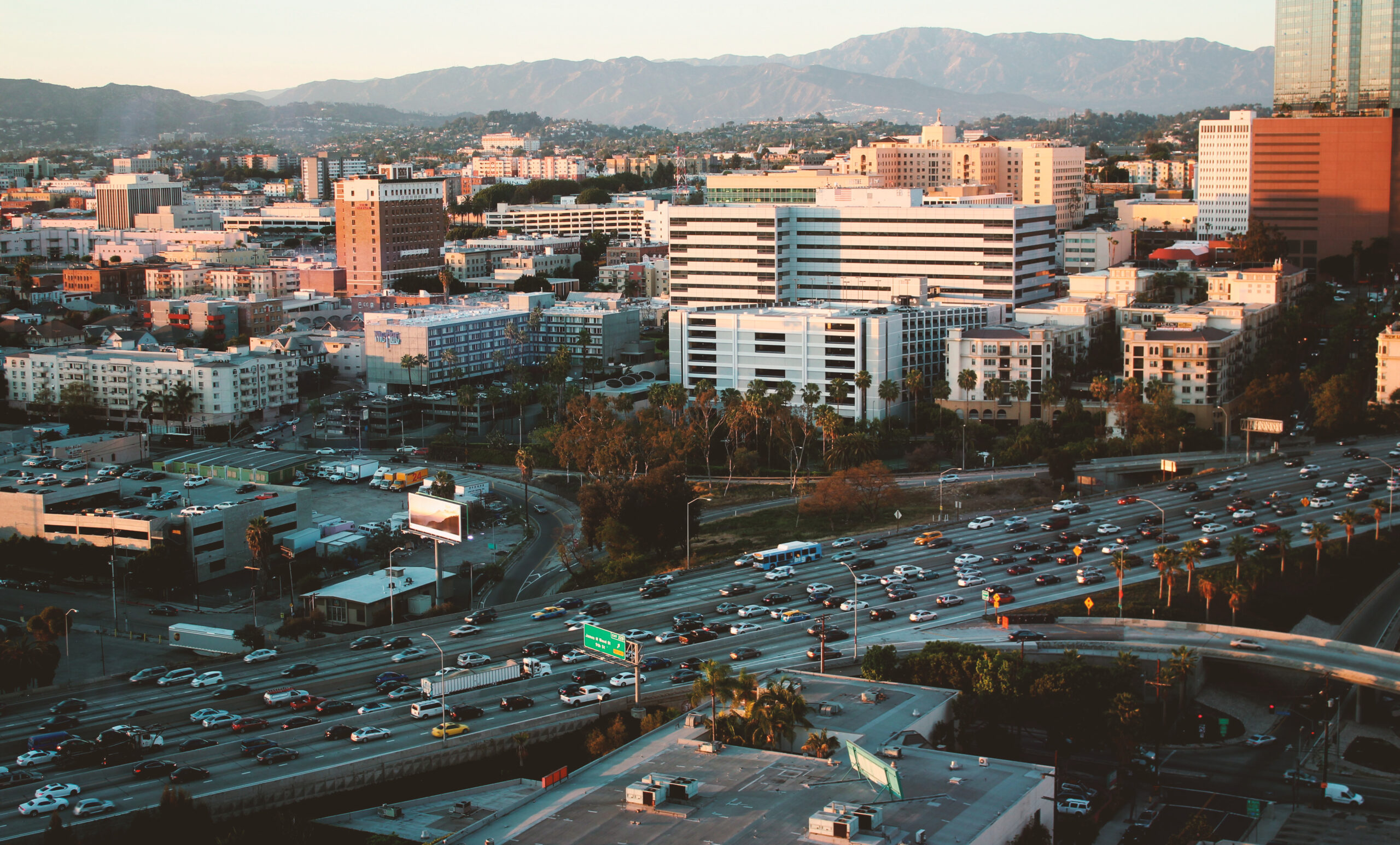
Since it first passed landmark climate legislation in 2006, California has been focusing on squeezing climate pollution out of every sector of its economy – and much of this has been successful. But California’s relative success in areas like electricity generation and agriculture stands in stark contrast to its failure on transportation – the largest source of climate pollution in the state.
In “California’s Road to Climate Progress,” a five-part research series by the Brookings Institution, Ben Swedberg and Adie Tomer examined why California has struggled to reduce transportation pollution, which is primarily the product of long driving distances and the failure to increase infill development in urban areas.
Key Takeaways:
- Spending on the wrong projects: Agencies such as Caltrans continue to fund roadway widenings. A review of recent and in-progress state projects from 2019 to 2027 shows $2.2 billion committed to projects that induce more driving and pollution
- Planning without enforcement: California requires each region to develop climate pollution reduction strategies, but there are no consequences for failing to meet targets.
- Compliance burden without funding: Local governments face a substantial compliance burden in tracking evolving regulations, often forcing even high-capacity cities to hire consultants rather than build internal expertise.
The researchers conducted an extensive literature review and interviewed over 25 in-state experts from government, academia, nonprofits, and the private sector to diagnose system failures. They analyzed legislation from 2008 to 2025, examined funding flows, evaluated compliance requirements, and created a first-of-its-kind flowchart to map how laws interact to bring transportation projects from concept to construction. This approach traces where procedural breakdowns occur and why well-intentioned laws don’t translate to reduced driving or more sustainable development patterns.
Building on the analysis of state failures, the research identifies several critical bottlenecks:
- Funding decisions bypass climate evaluations. The California Transportation Commission controls most discretionary transportation funding but doesn’t use the state’s own climate evaluation scores when deciding which projects to fund. Indeed, a 2023 Natural Resources Defense Council report found that from 2019 to 2027, the state programmed at least $2.2 billion to 178 projects that increased driving, while programs funding bike lanes and sidewalks faced budget cuts.
- Planning separated from implementation. Under state law, regional planning organizations prepare 20-year strategies that show which transportation projects will meet climate pollution reduction targets. However, the law explicitly states that cities are not required to align their local plans with these regional strategies. In fact, cities can approve sprawling developments that are unaligned with regional plans without penalty. Southern California’s regional planning organization could become the first to acknowledge that its climate strategy wouldn’t meet targets, and experts doubted the state would withhold funding. Moreover, while these regional bodies must demonstrate that their long-range plans meet climate pollution targets, they may select highway projects for their short-term construction programs without a climate evaluation.
- Compliance that overwhelms staff capacity. Cities must conduct environmental reviews for new projects, update housing plans showing how they’ll meet state quotas, rezone land, and submit annual reports—without dedicated state funding. Regional organizations must also develop methods for calculating climate pollution and prepare climate strategies through multiple public reviews, without state funding. Even well-resourced cities hire consultants rather than training permanent staff, preventing municipalities from building climate policy expertise.
To align spending with goals, Caltrans and the California Transportation Commission should stop funding any projects that add highway lane miles on state and locally owned roads. The state should repurpose the $400 million annual Trade Corridor Enhancement Program into a new “Infill Access Fund” that provides flexible grants for utilities and infrastructure in dense areas, making infill development more financially competitive with sprawl development. Third, the state should replace elaborate regional climate strategies with standardized reporting forms in which cities map planned development against state-published infill-area definitions, since current strategies exhaust local staff and lack enforcement.
California possesses the resources to solve its climate crisis, but only if it stops subsidizing sprawl. By shifting focus, the state can finally deliver the sustainable communities its laws promise.