California Cities Wanted Free Affordable Housing. Turns Out There’s a Huge Cost.
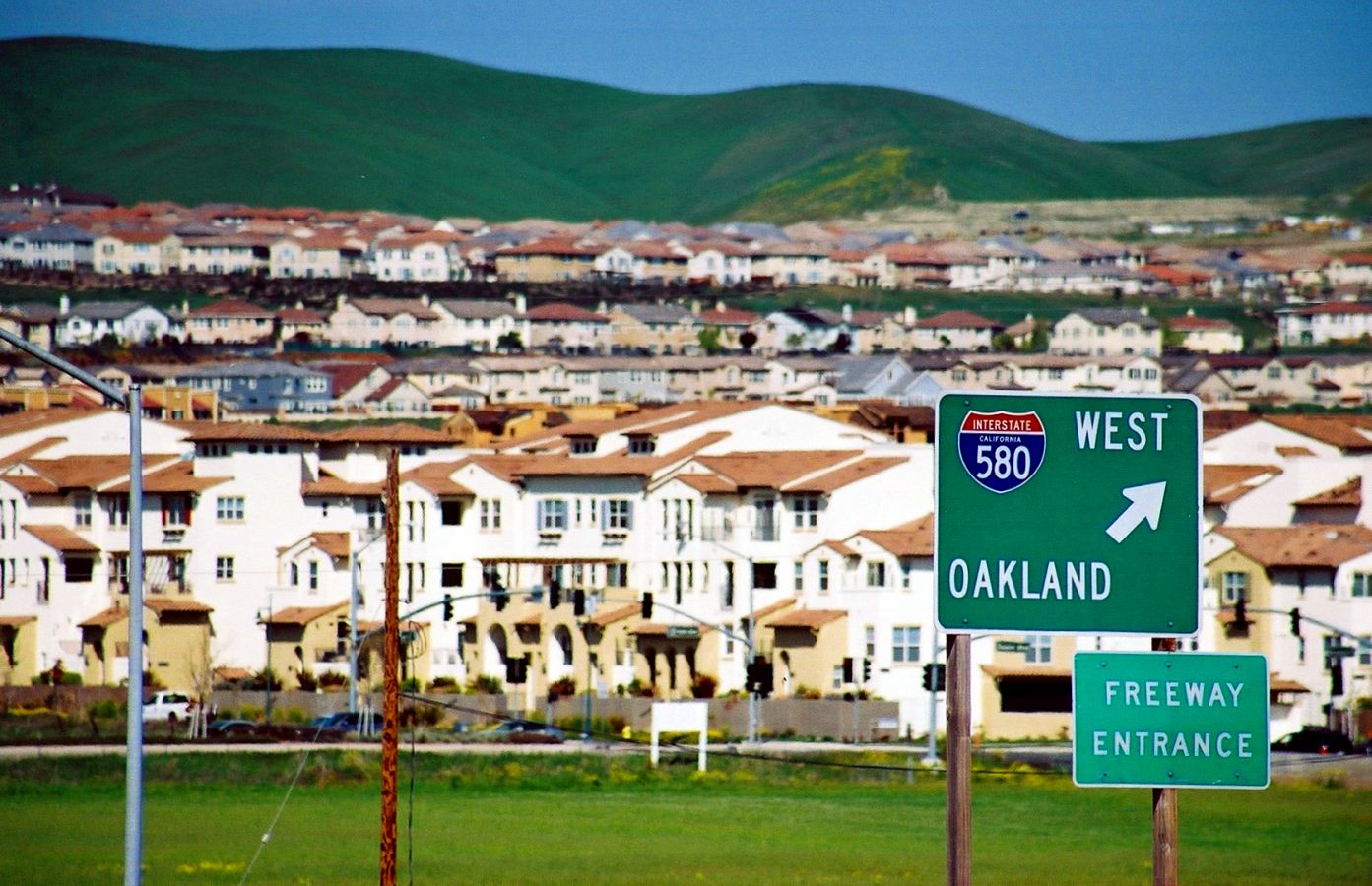
More than a third of California cities and counties, including San Francisco, Los Angeles, San Diego and fast-growing suburbs like Dublin and Irvine, require private home builders to set aside a portion of the homes they build at below-market rents for lower-income residents.
This practice, known as “inclusionary zoning,” has a straightforward, populist appeal: Cities get affordable housing for lower-income residents without having to contribute – or, importantly, raise – any of their own tax or bond revenues.
But a new study finds inclusionary zoning, or “IZ,” comes with harsh tradeoffs. Cities with IZ policies build nearly one-third fewer homes each year than they would if IZ policies were not in place – thereby contributing to the higher housing costs that result from restricted supply.
In Inclusionary Zoning and Housing Supply: Evidence from California’s Palmer Fix, Noah Kouchekinia of the University of California, Irvine studies how these mandates affect construction statewide.
Key Takeaways:
- Higher IZ percentage = fewer homes. Cities with IZ build 31.8% less housing per year, on average. But almost all of the drop in housing construction comes from cities with strict rules – either high IZ requirements (imposed as a percentage of total homes), and/or lower income limits on those homes – that lower rental income in the building. Cities with lower IZ requirements, or higher income limits, show no statistically detectable drop in construction.
- Building moves to cheaper neighborhoods. Under IZ, the required rent discount is based on local rents, so the discount is larger in pricier neighborhoods. For every 1% loss in total rental revenue, apartment projects built in a neighborhood drop about 9%. When comparing neighborhoods within the same city, the pricier ones — where IZ costs landlords more — see a statistically significant drop in apartment building approvals compared to cheaper neighborhoods nearby.
- Almost Double the Cost. Producing one affordable home through inclusionary zoning costs about $775,000, ultimately paid by market-rate tenants in the same building through higher rent. A tax-credit-funded affordable home costs about $441,000.
The researcher built a dataset covering 484 jurisdictions from local housing filings, then isolates cause from effect using a 2017 state law, the Palmer Fix, that simultaneously reactivated inclusionary ordinances that courts had blocked since 2009. The analysis compares building permits before and after 2018, weighting each jurisdiction by “stringency,” a measure of how much rent a landlord must forgo to comply (considering how deep the affordability requirements are, how many homes must be set aside, and how much below market rent the homes are). Because the Palmer Fix reactivated dormant ordinances statewide simultaneously, the design avoids a common problem: voluntary policy adopters often change other rules at the same time, clouding cause and effect.
Here’s what the researcher found:
Production drops substantially, concentrated in the strictest ordinances. Each added point of stringency costs a city about 7.6% of its new housing permits. Multiply that by the typical ordinance’s actual strictness, 4.2%, and you get the paper’s headline number: a 31.8% drop in construction. But that headline number hides something. The researcher split ordinances into four strictness groups and found the damage sits almost entirely in the strictest ones, above 5% stringency. The mildest ordinances had no statistically significant effect on construction.
Why the cuts land harder in a city’s priciest neighborhoods. Landlords give up more rent in expensive neighborhoods than in cheap ones, because the requirement is pegged to local rents. So one citywide ordinance still hits a pricey neighborhood harder than a cheap one nearby. Statewide, each added point of that burden cuts large apartment construction by 9% in these neighborhoods. A narrower test checks only neighborhoods inside the same city. That test finds an even bigger effect, though with more statistical uncertainty. The researcher concludes developers build fewer large apartments in a city’s pricier neighborhoods and more in its cheaper ones. He also checks a separate question: does a city’s overall construction loss show up as a gain in some neighboring city instead? The researcher concluded: it doesn’t.
Inclusionary zoning costs nearly double a tax-credit-funded unit. Renters in inclusionary jurisdictions paid roughly $6.97 billion in additional rent over the study period as a result of reduced supply. Those jurisdictions produced only about 8,990 income-restricted units in the same window, implying a cost near $775,000 per unit. The Low-Income Housing Tax Credit spends public money directly on affordable units, instead of spreading the cost across market-rate tenants’ rent. And that public spending can be offset through a progressive tax system. The researcher estimates this delivers a comparable unit for about $441,000, roughly half the cost.
State regulators already have authority under the Palmer Fix to review and suspend local ordinances that keep cities from meeting housing production goals, though none have exercised it to date. These findings suggest that authority is most worth using against ordinances above the 5% stringency threshold, where the tradeoffs are largest. Also, cities weighing new mandates could compare their expected cost per unit against existing subsidy tools before adopting them.
For California policymakers, the message is that most low-income residents who are unable to secure an inclusionary home must pay a small rent penalty to fund large gains for the few who do. Push mandates further, and that penalty for the majority grows sharply, eventually outweighing the benefit to winners entirely.
Photo Attribution: “Tassajara Road at 580, Dublin, March 22, 2008” by Michael Patrick, CC BY-NC-ND 2.0