SB 79, One Month In: Taking Stock of California YIMBY’s Signature Bill
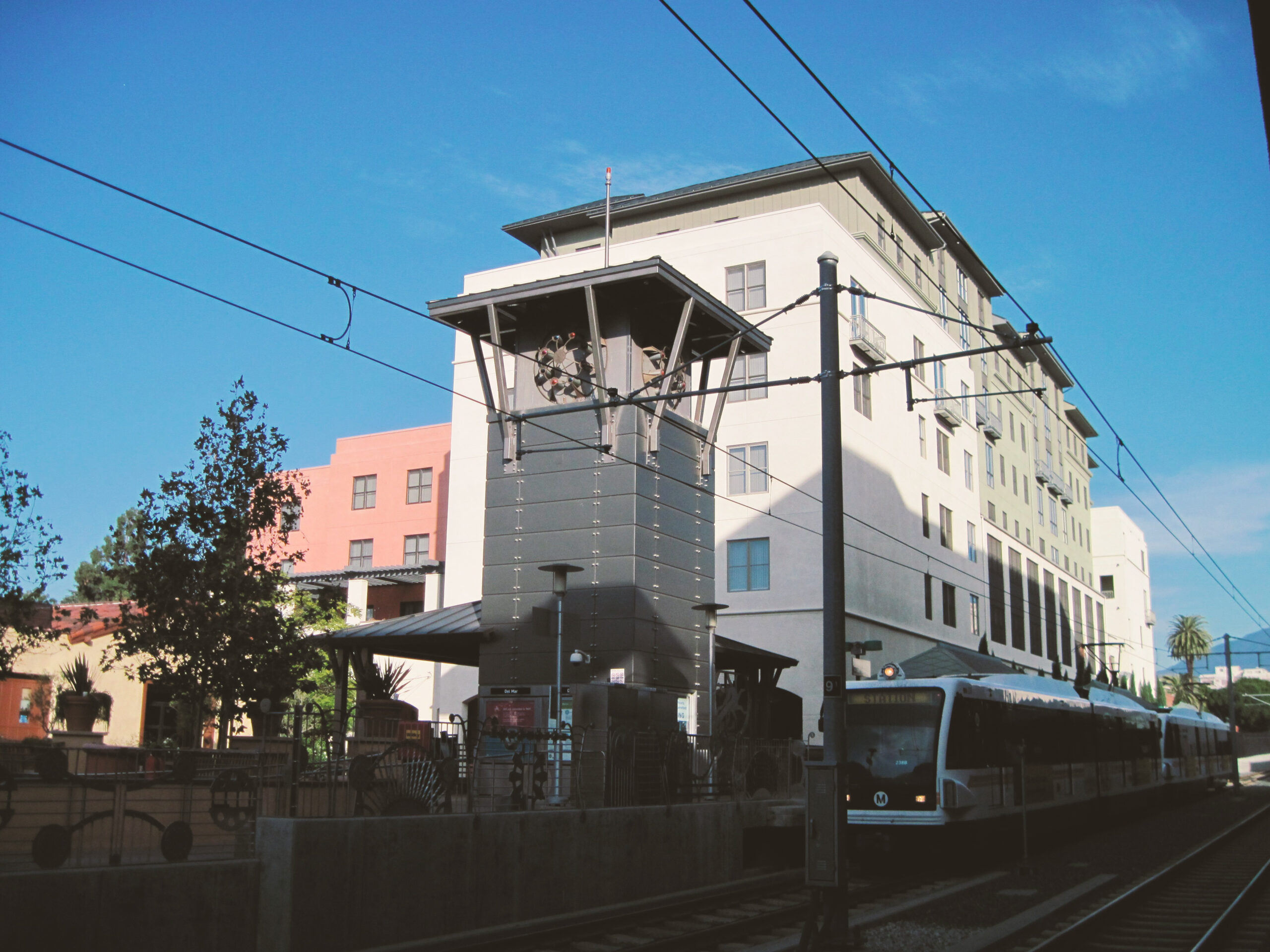
SB 79, California YIMBY’s signature legislation that legalized apartment buildings near transit stops throughout California, went into effect on July 1, 2026. Under the law’s provisions, jurisdictions throughout the state must now begin implementation, which includes various pathways to achieve compliance.
To date, cities covered by SB 79 have taken a wide range of approaches to compliance. While many cities are following the law in good faith, there are clear examples of cities pushing the boundaries of what would be considered compliance with the law; in some cases, what appear to be clear violations are likely to result in legal challenges.
In addition to the projects and progress listed below, there are likely other SB 79 projects and implementation strategies that we haven’t heard about yet. If you know of SB 79 projects in your community, please reach out to Aaron Eckhouse, who played a major role in writing and passing SB 79, and is tracking SB 79 progress.
Following is California YIMBY’s snapshot review of the impact of SB 79 in its first month.
Hundreds of New Homes
While it’s difficult to track projects across the state, by the end of July, builders had submitted proposals for at least several hundred new homes across 15 projects in 5 cities – Palo Alto, San Mateo, Atherton, South Pasadena, and Santa Monica.
In South Pasadena and Palo Alto, the proposed SB 79 projects would be more new, multifamily housing than either city has built in decades (since 1999 in Palo Alto, and since at least 1980 in South Pasadena).
In general, most cities appear to be implementing SB 79 in good faith, and with minimal carveouts. Small deferrals for historic resources (in Mountain View and Sunnyvale, for example) and fire hazard areas (Glendale) are fairly common, but aggressive delay maneuvers are not.
San Jose made use of their authority under the law to exempt a large industrial area, but retained a great deal of capacity unaltered in the rest of the city. Some cities, like Sacramento and Berkeley, opted not to take any deferrals or exclusions at all; SB 79 will apply in full force in those cities.
In some cases, City Councils have even overridden planning staff who sought to make more aggressive use of options to defer the bill’s provisions. In Menlo Park, the Council chose not to defer implementation of SB 79 in the city’s downtown area, where zoning exceeded the 50% of SB 79 threshold to qualify for deferral, since that was the exact area they had already planned to prioritize housing growth.
Similarly, several members of the Oakland City Council opted to remove SB 79 deferrals within their districts. In both cases, local, pro-housing leadership views more housing as a benefit to their communities, and are using SB 79 to advance their local pro-housing agendas.
Across the state, most cities are not passing any SB 79 implementing ordinances. While there may be advantages for both the city and applicants to having a local ordinance in place, they are not necessary for SB 79 to function. And most cities appear to want to follow the law, even as prominent scofflaws attract more attention.
Examples of Creative Compliance
Three of California’s largest cities – Los Angeles, San Francisco, and San Diego – have aggressively shrunk SB 79’s coverage and impact within their boundaries. While they are (mostly) doing so in ways allowed for by the law, these cities would likely see more housing growth, sooner, if they leaned into the possibilities of SB 79 rather than looking for ways to slow it down.
San Francisco and Los Angeles are building on rezoning work they did as part of their Housing Element process — the Family Zoning Plan in San Francisco, and the Housing Incentive Program in Los Angeles. The legislature added specific provisions to SB 79 to allow cities that had already made good-faith transit oriented zoning efforts to defer SB 79, so long as their local zoning plans resulted in a substantially similar amount of housing as would have been built under SB 79.
The innovation SF and LA added was to rezone any low-density areas around transit up to the threshold for deferral – which is 50% of the SB 79 zoned capacity – allowing them to delay SB 79 across the entire city. (Palo Alto picked up on this too, although they had done nothing like the pre-SB 79 work of SF & LA).
In SF, that meant a bit of rezoning in the city’s Eastern Neighborhoods to get closer to SB 79 standards. In LA, that meant rezoning high-resource single family areas with a low-rise (4-story) multifamily program. Both cities did this primarily through local density bonus programs, which we’ll get to later.
San Diego took more of a kitchen sink approach. The major work was done by a citywide deferral for low-resource areas (possible because San Diego already has citywide TOD capacity of at least half SB 79’s), a deferral for very high fire hazard areas (which San Diego maps very expansively), and an exclusion for areas with no walking path to the qualifying transit stop (this one has some very questionable conclusions).
Some of this is a result of San Diego’s unusual topography of mesas and canyons, which create many pockets of fire risk and disrupt walking paths. The walking path exclusion was actually added to SB 79 to address this very reality.
However, San Diego’s mapping of both fire risk and unwalkable areas raise some questions. The city’s fire risk map extends far beyond the State Fire Marshal’s and frequently covers relatively flat, gridded, and urbanized areas. The walking path exclusions are even more puzzling, with many properties excluded that certainly seem on Google Maps to have a clear walking path to the station.
San Diego has a strong record of leadership on housing, and may end up using the extra planning time allowed by their aggressive deferrals to produce TOD plans that align with the letter and intent of SB 79.
Overall, these three major cities all still have substantial transit-oriented development capacity. Los Angeles made a major, historic shift to its zoning by allowing apartments within single-family zoned areas near high quality transit, even though they did so at lower heights and densities than SB 79 would have allowed.
In addition, the 50% threshold only gets cities a temporary deferral until the next RHNA cycle (starting in the early 2030s), so in time, those cities will have to plan for the full capacity of SB 79.
But as always, cities that begin legalizing more homes sooner will see more homes, and more affordability, than those that wait and fully play out their deferrals.
The Usual Suspects: Asking for Trouble
Some cities are outright breaking the law, and in rather creative ways.
Beverly Hills was the first city to propose a local TOD alternative plan, which are allowed under SB 79. The core logic of those plans is straightforward: The city can move some of the zoned capacity from one place to another; the alternative plans are then reviewed and certified as compliant by the California Department of Housing and Community Development (HCD).
But Beverly Hills is trying a shell game by which they just make that zoned capacity disappear instead.
A local alternative plan under SB 79, also referred to as an “Eckhouse Plan,” must maintain the same “net zoned capacity” as the state zoning standards. Net zoned capacity is calculated by subtracting the density & floor area of existing uses from the capacity allowed by the zoning.
Since the law requires cities “maintain at least the same total net zoned capacity” between SB 79 and the local alternative plan, the city should do that on both sides of the ledger: subtract existing uses from SB 79’s capacity, and from their local plan’s capacity.
Instead, Beverly Hills calculated net zoned capacity from SB 79, and then compared that to the total zoned capacity of their local plan. The result: overcounting their local plan’s capacity by nearly 3,000 homes, or 15% of the total capacity.
Most troublingly, HCD did not address this problem in their initial review of the city’s alternative plan. We will continue to work with HCD and other stakeholders in Beverly Hills to ensure that their final Eckhouse Plan is compliant with the letter of the law.
Burlingame is also moving forward with an alternative plan, and has found another way to make capacity disappear: by putting it on undevelopable lots. Over a third of the capacity in Burlingame’s plan is stacked on lots that will never be redeveloped for housing: the high school (~18%), a large public park next door (~13%), and parcels holding the very tracks on which Caltrain runs (many small parcels that are hard to calculate).
This tactic of submitting housing plans on land that is undevelopable for housing has been a common feature of plans submitted under the Regional Housing Needs Assessment for many years. Cities attempting this move for SB 79 compliance will likely find themselves in court.
Oceanside found another way out of planning for all their SB 79 capacity: declaring huge swathes of the city unwalkable. SB 79 includes a provision to let cities exclude areas that have no walking path of a mile or less to reach the qualifying transit stop. This was intended to address areas where a river, canyon, or other physical barrier makes access impossible (it’s not “transit oriented” development if you can’t get to the transit).
Oceanside, however, has concluded that parcels with no physical barrier, and even one immediately adjacent to the train station, have no walking path. The adjacent parcel in question is a giant vacant lot, and it’s even zoned for (low density) housing; under any scenario, apartments on that vacant lot are a viable use. Oceanside apparently thinks otherwise, and is abusing a provision meant to address real barriers to access to reinforce their own anti-access policy choices.
Most of the SB 79 coverage in Burbank is around a planned bus rapid transit (BRT) route that LA Metro is poised to break ground on imminently. Burbank has never been totally sold on dedicated bus lanes; with SB 79 looming over the BRT stops, Burbank is attempting to cancel the BRT project in its entirety. LA Metro is litigating their obstructionism.
A Few Words on Density Bonus Law
Beverly Hills isn’t just using creative accounting to make 15% of their SB 79 capacity disappear. They’re also playing fast and loose with how their TOD zoning interacts with state density bonus law (SDBL).
State density bonus law is a critical tool that incentivizes mixed-income housing by giving developers flexibility to actually build in the face of restrictive local limits on density, building heights, lot setbacks, and more.
SB 79 projects can use density bonus too, but they have one special limitation: if the SB 79 height limit exceeds the existing local height limit, they cannot get extra height through the density bonus – they must stop at the SB 79 height limit. Since SB 79 already provides significant bonus height, the legislature didn’t want to let those projects double dip on building height.
Beverly Hills and Palo Alto are trying to keep the SB 79 limitation on bonus height in their local plans. But when a city adopts a local alternative plan, they replace SB 79’s height limits with their own. That means SB 79 isn’t overriding the local height limit any more, and so the limits on density bonus heights no longer apply. By extending height limits to their TOD plans, Beverly Hills and Palo Alto are in clear violation of state housing law.
We mentioned earlier that San Francisco and Los Angeles, both of which have their own, locally-enacted density bonus programs (distinct from state density bonus law), had used local density bonus programs as an alternative to SB 79 zoning standards.
This is a concerning trend within both cities, where local bonus programs are used instead of normal zoning changes. One result (and intent) of this is to restrict access to state density bonus law waivers and incentives, which can provide builders with relief from local limits on height and other zoning standards. State density bonus law is an important source of flexibility for homebuilders, and SF’s use of local density bonus programs for its Housing Element rezoning is currently being litigated.