One Reason Why American Public Transit is More Expensive to Build than in Europe
America pays roughly 50 percent more per mile for public transit than comparable countries do, and a little-examined culprit is the community engagement process meant to improve projects. A new analysis from the Urban Institute finds that poorly structured public participation drives up costs, lengthens timelines, and can produce outcomes that don’t reflect what most community members want.
In “The US Spends More Time and Money Building Transit Than Most Countries. Inefficient Community Engagement May Help Explain Why,” Christina Plerhoples Stacy, Gabe Samuels, and Yonah Freemark of the Urban Institute examined how community engagement practices shape transit project costs across the US and internationally.
Key Takeaways:
- Timeline drag. When public input processes lack formal time limits or allow key decisions to be repeatedly reopened, planning phases stretch for decades. San Francisco’s Van Ness Bus Rapid Transit corridor took nearly 30 years from concept to launch, and construction costs rose accordingly.
- Design cost escalation. The BART Silicon Valley Extension, where deep tunneling was adopted partly to address community concerns about surface disruption, ballooned from an initial estimate of roughly $4.7 billion (~$800M/mile) to approximately $12.7 billion (~$2B/mile).
- Participation gaps. Current engagement methods typically draw higher-income and more politically motivated participants than the surrounding community, meaning engagement-driven project changes may not reflect the actual preferences of the people who will use the transit.
The researchers conducted a literature review of transit cost research and community engagement practices in the US and abroad, comparing countries with similar planning and institutional contexts to isolate the drivers of the American cost premium. They examined specific case studies, including San Francisco, San Jose, and Phoenix, as well as international models from Italy and Turkey, where formal cost-containment rules and time-bounded engagement structures are standard practice.
The literature review surfaces three concrete patterns from the evidence:
- Engagement delays inflate costs directly. When engagement processes lack formal closure mechanisms, policymakers facing constituent pressure, even from a non-representative minority, hesitate to finalize decisions. Every year of delay adds to construction costs. The Van Ness BRT, a relatively modest project, illustrates how ordinary planning dysfunction accumulates into higher costs.
- Design changes driven by engagement can multiply project costs. The BART Silicon Valley Extension case is stark: a technically demanding tunnel project whose community-responsive design changes contributed to a cost overrun of more than $8 billion. Current engagement methods result in costly design revisions that address narrow concerns without improving system performance.
- Public meetings skew toward the loudest, not the most affected. Research on public meetings consistently finds they draw participants with time, resources, and political motivation — attributes that correlate with higher income and homeownership — rather than the full range of affected residents. This means that engagement-driven changes may systematically favor incumbent residents over future riders.
The research points toward several concrete reforms, each directly grounded in comparative evidence: front-loading engagement to the project planning phase while limiting renegotiation of technical decisions already made; requiring agencies to document how participation was tracked and what concerns were addressed; and adopting contingency budget caps, a standard practice in Italy and Turkey, that prevent engagement-driven design changes from causing open-ended cost escalation. Bypassing communities entirely isn’t the right answer either. In Phoenix, a transit agency that skipped meaningful outreach for a light rail project faced a city council revolt that nearly killed it.
Better-designed engagement is what makes accountability real. If participation processes are captured by a narrow, unrepresentative slice of affected residents, the resulting projects serve neither efficiency nor equity.
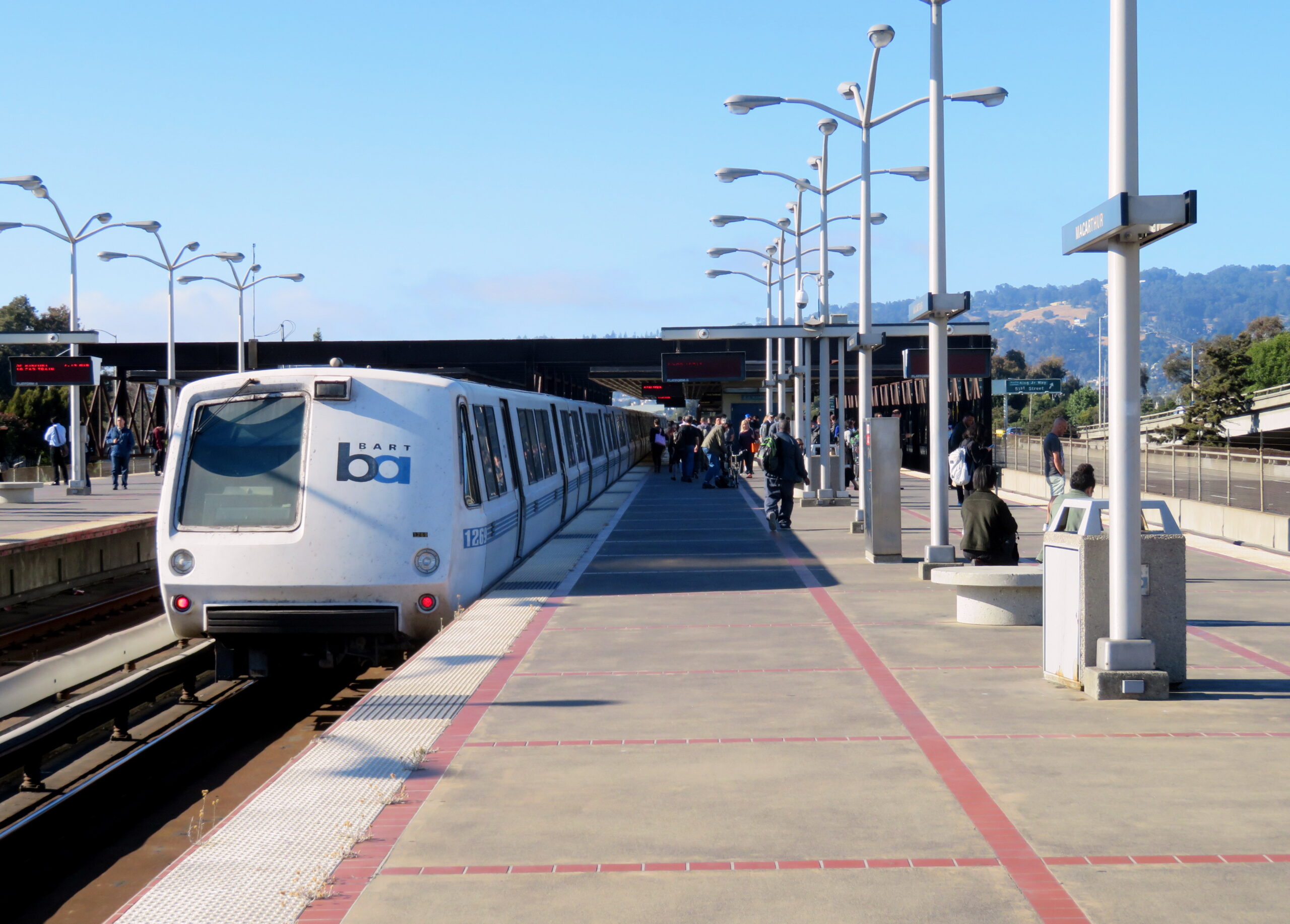
Photo by Pi.1415926535, CC BY SA 3.0 via Wikimedia Commons