Why Building Homes in Your Neighborhood’s Backyard Is Actually the Fiscally Conservative Move
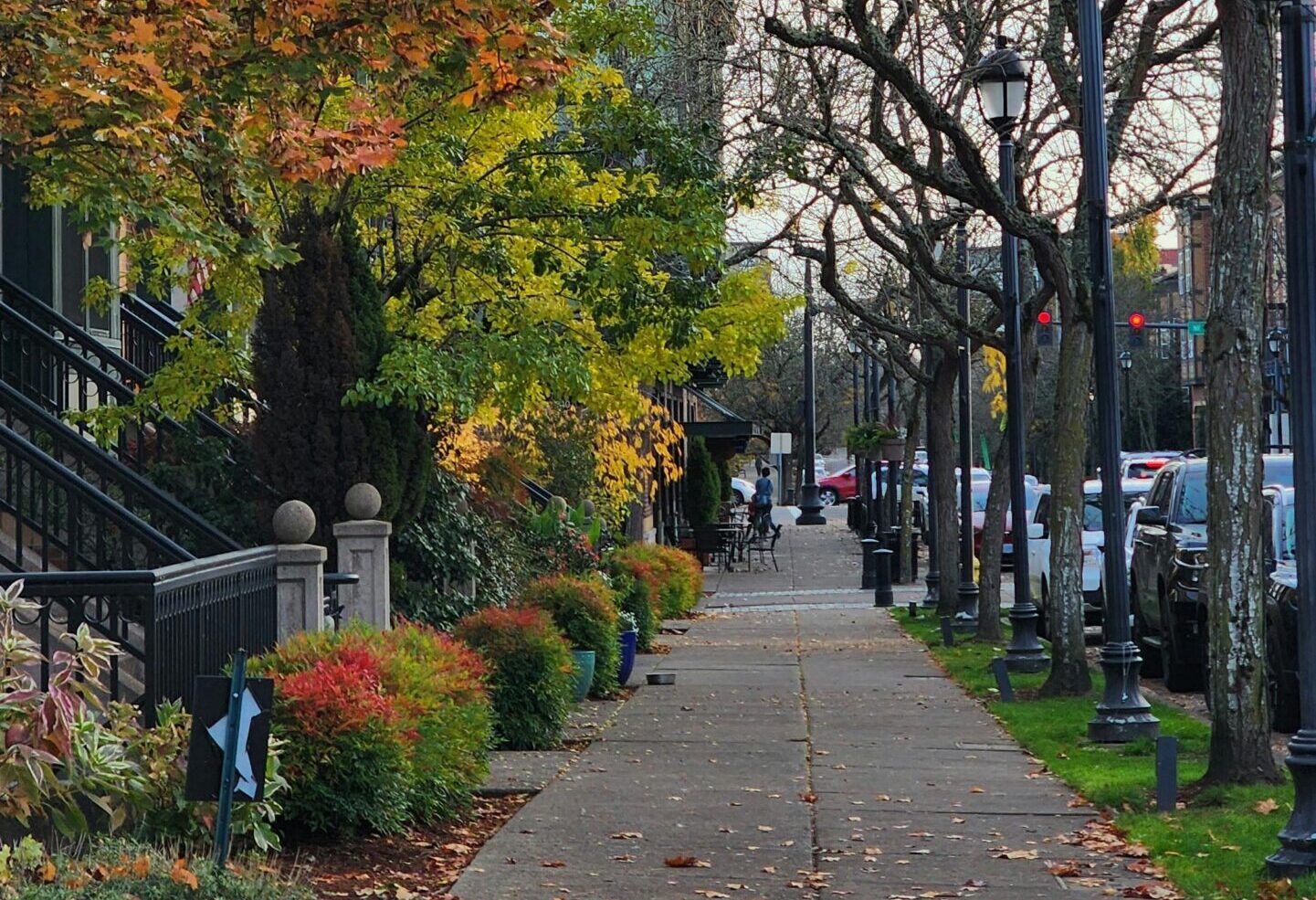
Building homes near jobs, transit, and stores costs governments roughly $21,000 less per unit in upfront infrastructure than building at the suburban fringe — and that gap widens over time.
America’s housing shortage is well-documented, but policymakers have rarely accounted for the actual costs of different location choices to taxpayers. The fiscal math is significant: infill homes tap into existing roads, water, and sewer infrastructure, while fringe development requires building all of it from scratch at public expense.
In “Building Homes Near Jobs, Stores, and Transit Saves Public Dollars,” experts at the World Resources Institute (WRI) and ECOnorthwest, with support from The Pew Charitable Trusts, examined the fiscal impact of two housing development scenarios — building near existing jobs, stores, and transit versus building at the urban fringe — across ten states of widely varying size, geography, and political orientation.
Key Takeaways:
- Lower upfront infrastructure costs. Building homes near jobs, stores, and transit costs approximately $21,000 less per home in upfront public infrastructure — roads, water lines, sewer connections — than building on the urban fringe, with the gap largest in states that tend to build more densely, such as Minnesota and Washington.
- Halved ongoing maintenance costs. Annual per-home infrastructure maintenance obligations average $309 for homes near jobs, stores, and transit versus $620 for homes at the urban fringe, a difference of roughly 50%, which adds up over the life of the development.
- Faster payback on public investment. Property taxes from homes built near existing amenities recoup infrastructure investment in nine years on average, compared to 13 years for fringe development, a 50% longer payback period that strains local balance sheets.
To produce these estimates, ECOnorthwest modeled housing production scenarios for 10 states — Arizona, Florida, Maryland, Minnesota, Montana, New Hampshire, North Carolina, Pennsylvania, Texas, and Washington — over 10 years from 2023 to 2033. Researchers used U.S. Census population data, Up For Growth housing underproduction estimates, and Replica census-tract-level vehicle miles traveled (VMT) data to define two scenarios: one in which new homes concentrate in low-VMT census tracts near existing amenities, and one that mirrors current development patterns skewed toward the urban fringe. Infrastructure costs were modeled per housing unit using 2024 construction cost data, adjusted by state-level RSMeans indices, with ongoing maintenance drawn from the Congressional Budget Office and the ASCE Infrastructure Report Card figures. Property tax revenue was calculated by applying statewide average effective rates to each home’s total construction and land costs.
The findings hold up consistently across all ten states, regardless of geography or political environment.
- Up-front infrastructure savings. Across all 10 states, homes near jobs, stores, and transit had average upfront infrastructure costs of roughly $41,700 per home, compared with $63,000 for fringe development. That’s a one-third reduction driven by the fact that infill housing, which includes apartments, townhomes, and ADUs (accessory dwelling units, or small secondary homes on existing lots), requires far fewer lane-miles of road and linear feet of water and sewer pipe per unit than detached single-family homes on new lots.
- Ongoing maintenance efficiency. The $309-versus-$620 annual maintenance gap reflects both housing type and location: compact multifamily buildings share infrastructure among many more units than single-family homes do, and infill development doesn’t require new utility extensions. That difference, multiplied across thousands of units and decades of obligation, represents a substantial long-term liability for fringe development.
- Property tax productivity per acre. Homes near jobs, stores, and transit generate about 13% more property tax revenue per acre than fringe development does, primarily because compact, higher-density development fits more taxable value onto each acre. Combined with lower costs, this yields the nine-year versus thirteen-year payback gap noted above.
The research suggests that states and localities should revisit land-use regulations, such as single-family-only zoning and restrictive parking mandates, that effectively prohibit compact housing near existing amenities, as the study directly links these regulatory patterns to higher public costs per unit. Localities that finance infrastructure with long-term debt should weigh whether fringe approvals generate sufficient long-term tax revenue to service those obligations, given the payback period documented here.
Where homes get built turns out to be as important as whether they get built, and the evidence suggests that building in already-connected places saves taxpayers money, generates more revenue per acre, and pays off public investment faster.
Photo by Sathyaprabha Rakkimuthu via Pexels